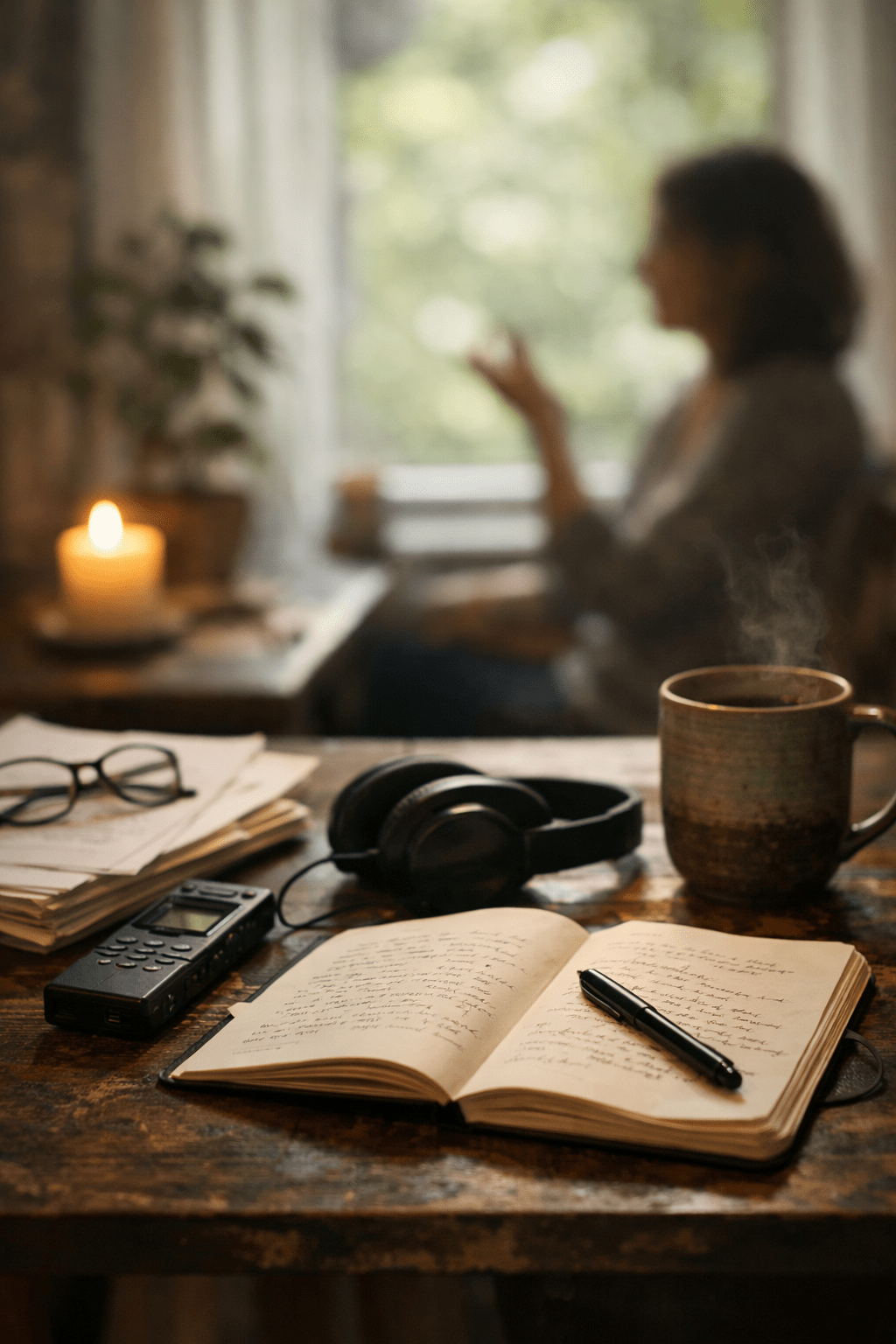
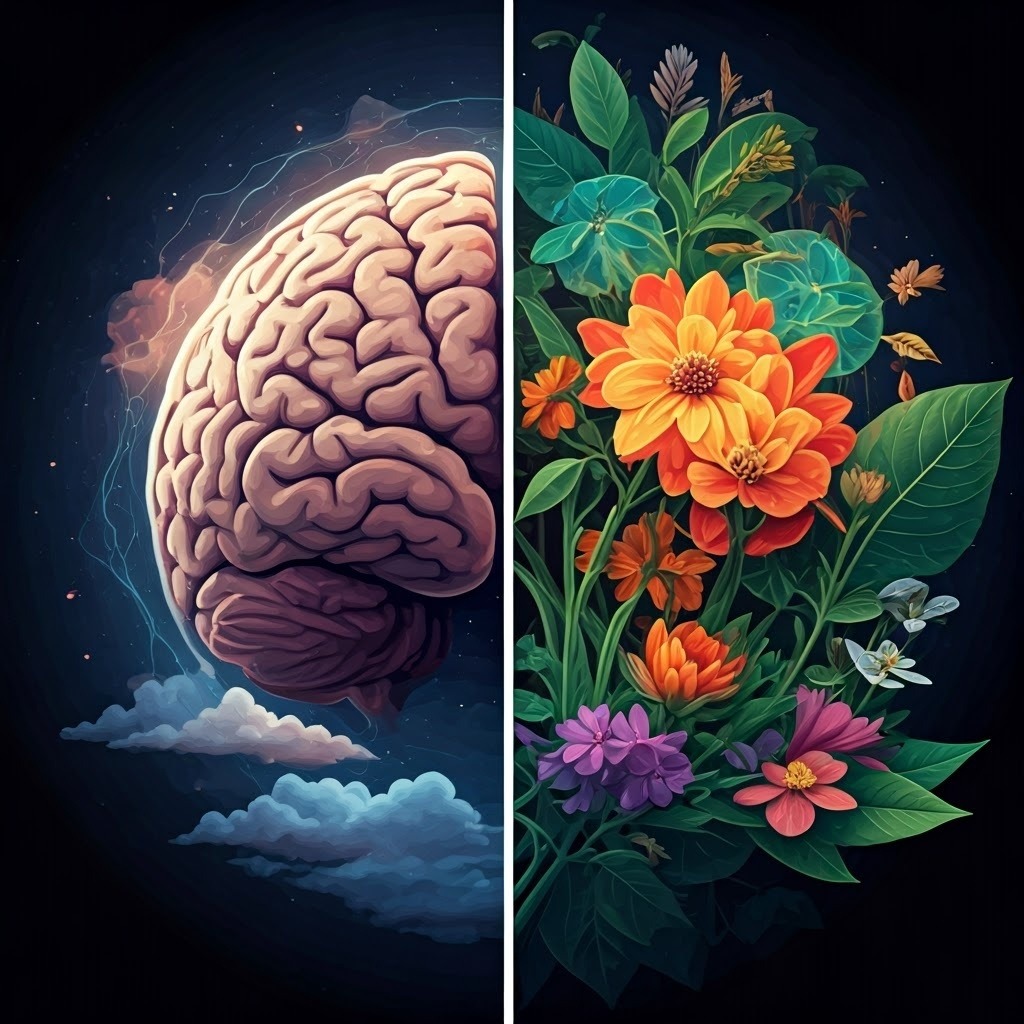
Every family carries stories that were never spoken aloud. Some are held in photographs and archives. Others live quietly in the body — in the breath, the muscles, the patterns that repeat without explanation.
This series of vignettes traces the subtle ways a lineage can shape a life, not through myth or metaphor alone, but through the nervous system itself. It explores how early experiences, ancestral ruptures, and the landscapes we walk can intertwine, creating sensations that feel older than we are.
These stories are not about ghosts. They are about physiology. About the ways the body remembers what history forgets. And about how healing can unfold when we learn to listen to the places where the past still lives inside us.
Each vignette is a doorway — into memory, into sensation, into the quiet intelligence of the body. Together, they form a map of how a lineage can reorganise itself through one person’s willingness to feel, to witness, and to walk toward what was once too overwhelming to face.
Vignette 1 — The First Knowing
Jenny had always known that something in her family line was unfinished.
Not because anyone told her, but because her body did.
A heaviness in the chest.
A tightening in the gut.
A pattern of betrayal and collapse that repeated across decades.
These sensations were her first teachers.
Long before she understood lineage or trauma, her body whispered the truth:
Some of this is yours.
Some of this is not.
But all of it is asking to be felt.
Reflection
Some people inherit heirlooms. Others inherit silence. The body carries what the family could not speak. When sensations repeat across decades, they are not random — they are invitations. A lineage is not healed by understanding alone, but by learning to listen to the places where history still lives in the body.
Vignette 2 — The Child Who Could Not Walk
At eighteen months old, Jenny’s world narrowed to a hospital cot.
Six months of separation, procedures, bright lights, and unfamiliar hands.
When she finally returned home, her condition flared again.
She was kept off her feet for another year.
Not allowed to walk.
Not allowed to explore.
Not allowed to follow the natural impulse every toddler is wired for: move toward life.
Her tiny nervous system adapted the only way it could.
It learned freeze.
It learned collapse.
It learned to read the emotional weather of adults with exquisite precision.
These early adaptations became the architecture of her sensitivity — the very sensitivity that would later allow her to feel the echoes of her ancestors.
Reflection
Early immobility shapes the nervous system in profound ways. A child who cannot move learns to survive through stillness, attunement, and vigilance. These adaptations are intelligent, not pathological. They become the foundation for a sensitivity that can later perceive what others have learned to numb. Sometimes the first wound becomes the first doorway.
Vignette 3 — The Three Cousins
Years later, during a healing session, three “cousins” appeared on the battlefield of Sedgemoor.
One collapsed.
One frozen.
One scanning for danger.
They were not men.
They were the three survival states Jenny had carried since childhood — and the same states her ancestors had carried since 1685.
Her body recognised them instantly.
She had lived their patterns long before she had language.
Reflection
The nervous system speaks in images long before it speaks in words. The “three cousins” were not spirits but states — collapse, freeze, vigilance — each one a survival strategy passed down through generations. Recognising them is the beginning of integration. We cannot heal what we cannot name.
Vignette 4 — Landscapes That Listen
To help them, Jenny walked the land.
The Somerset wetlands held the cousin who had lost his Will, mirroring his stillness.
Arthur’s Stone held the cousin trapped in shock, offering orientation and breath.
The Bleadon sluice gate mirrored the cousin locked in vigilance, its rusted mechanism echoing the bracing in her thighs and jaw.
Each place acted as a co‑regulator.
Each landscape helped her body complete a survival response that history had interrupted.
The land remembered.
And it responded.
Reflection
The land remembers. It holds the sensory imprint of what happened upon it, and it offers the conditions needed for repair. When a landscape mirrors a nervous‑system state, the body recognises itself and begins to reorganise. Healing is not always internal. Sometimes it is geographical.
Vignette 5 — The Inverted Vortex
One day, something shifted.
A vibration rose through her cells — not metaphorical, but physical. A sense of direction reversing, as if an old pattern had finally reached its turning point.
The inverted vortex.
The spinning top.
The moment when a lineage begins to reorganise.
Jenny felt it not as a vision, but as a change in her breath.
Reflection
Transformation often begins as a subtle shift — a change in breath, a new direction of energy, a sense that something is turning inside. This is the nervous system reorganising itself. Not through force, but through readiness. A vortex reverses when the system no longer needs to spiral in the old direction.
Vignette 6 — The Call of Lord Ormelie
Then came the name she had never heard: Lord Ormelie.
Her late father nudged her attention toward him, and her body tightened in recognition. His story — disinheritance, misdiagnosis, immobilisation — mirrored her own childhood wound.
A man declared “mad” when he was simply overwhelmed.
A lineage destabilised by betrayal.
A survival response frozen in time.
Jenny felt the echo of it in her bones.
Reflection
When an ancestral story mirrors our own, the body responds before the mind understands why. This resonance is not coincidence; it is recognition. The nervous system senses unfinished business across generations. Sometimes the past rises not to haunt us, but to be completed through us.
Vignette 7 — The Descent Into Helheim
In Glastonbury, guided by Tim’s drum, she descended into Helheim — the realm of the past, the unconscious, the frozen.
The portcullis.
The tunnels.
The red dragon rising.
These were not fantasies. They were somatic metaphors for states her body had known since infancy.
Her ancestor appeared with a chain around his neck —
a symbol of immobilisation that had never completed.
Behind him, a procession of shadowy figures — the lineage still waiting for integration.
Reflection
Helheim is not a place of death — it is a metaphor for the deep, frozen layers of the nervous system. The tunnels, the darkness, the chained ancestor: these are images of immobilisation. Descending into them is not regression. It is courage. It is the willingness to meet what was once too overwhelming to feel.
Vignette 8 — The Moment of Release
Hearpe music softened the freeze.
Red apples — symbols of nourishment — appeared in her awareness.
The landscape shifted.
Lord Ormelie stood whole, coherent, restored.
He bowed to her. Not as a ghost, but as a pattern completing itself.
His wife and children appeared behind him, playful and alive.
A lineage re‑woven.
“The bagpipes are important to your healing,” he said —
a reminder that low‑frequency resonance reaches the deepest layers of the nervous system.
Reflection
When a survival response completes, the imagery changes. The landscape softens. The ancestor stands upright. The body breathes differently. This is integration — the moment when what was frozen begins to move again. Healing is not a story of erasing the past, but of restoring coherence.
Vignette 9 — The Child Who Walks Again
As Jenny left Tim’s flat, she understood:
Her early childhood illness had not caused the ancestral wound. But it had shaped her nervous system in a way that made her exquisitely attuned to it.
She had become the one who could feel what others had learned to numb.
The one who could metabolise what had been frozen for generations.
The one who could walk the land and listen to its memory.
Her father had once said, “Let that child walk.” A command that ended her own immobilisation.
And now, at last, she was walking — not just for herself, but for all those who had been unable to move.
Reflection
Early wounds do not define us, but they shape the pathways through which healing arrives. Jenny’s childhood immobility became the very sensitivity that allowed her to sense and integrate her lineage’s unfinished patterns. The child who could not walk became the adult who could walk the land, listen to its memory, and complete what others could not. Sometimes the nervous system chooses its healer long before the healer understands the task.
Closing Reflection
Healing a lineage is not a single moment.
It is a slow, spiralling return — a movement between past and present, body and land, collapse and emergence.
As Jenny’s story shows, the nervous system is both archive and alchemist.
It stores what was unfinished, and it also knows how to transform it.
Not through force, but through presence.
Not through erasing the past, but through integrating it.
When a survival response completes, something shifts.
The breath deepens.
The ground feels different.
The old patterns loosen their grip.
And the child who once could not walk begins to move again — not just for herself, but for all those who came before.
This is the quiet miracle of lineage repair: the past reorganises, the present softens, and the future opens in ways the body has been waiting for.
About This Work
This work explores the quiet places where personal history and ancestral memory meet the body. It is not about recreating the past, but about understanding how the past continues to live through sensation, pattern, and instinct.
Through a nervous‑system lens, lineage becomes something we can feel — in the breath, in the muscles, in the moments when our reactions seem older than we are. By listening to these signals with care, we begin to recognise what belongs to us, what was inherited, and what is ready to be released.
These vignettes trace one such journey: a movement through early childhood illness, ancestral rupture, symbolic landscapes, and the subtle ways the body reorganises when it is finally met with safety and understanding.
This is work of remembrance, but also of repair. A way of honouring the stories that shaped us, while creating space for new patterns to emerge.
Disclaimer
This work is a creative and reflective exploration of personal and ancestral themes through a nervous system lens. While it draws on concepts from trauma theory, somatic psychology, and intergenerational research, it is not intended as medical, psychological, or psychiatric advice.
The experiences described are subjective and symbolic in nature. References to ancestral memory, lineage repair, landscapes as co-regulators, and somatic imagery are presented as interpretive frameworks for meaning-making — not as literal historical claims or scientifically established mechanisms of inherited memory.
Individual responses to trauma, illness, and healing vary widely. Readers are encouraged to seek qualified medical or mental health support for personal concerns related to trauma, dissociation, shock, or nervous system regulation.
This work honours the body’s capacity for meaning and integration, while recognising that healing is complex, deeply personal, and best undertaken with appropriate support where needed.