The herd was already gathered that morning, breath rising softly in the cool Somerset air. One mare stood slightly apart from the others, not excluded exactly, but holding the edge of the circle. Every so often another horse would drift close, test the space, and then move away again.
Nearby, a participant stood quietly watching.
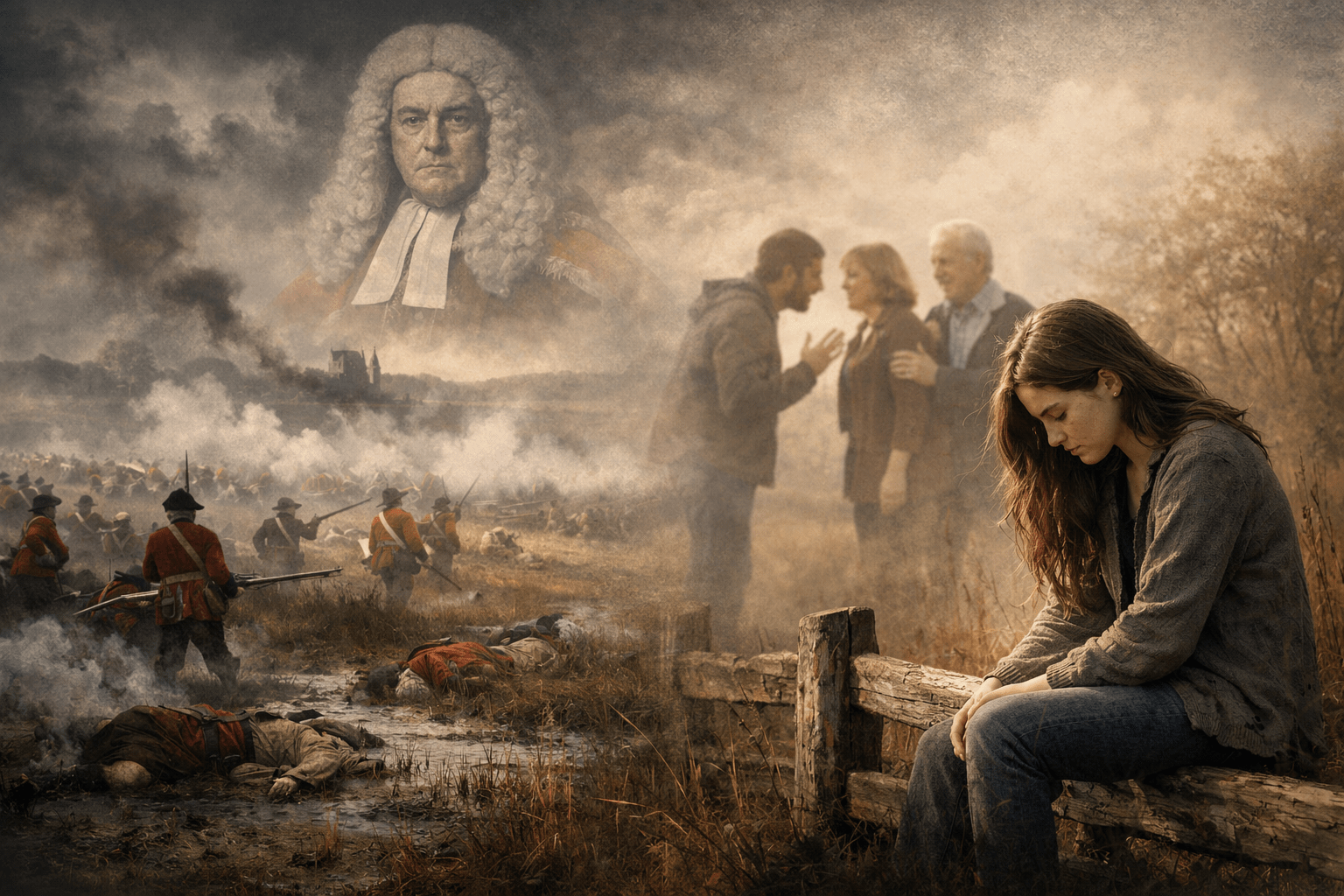
For many years this individual had carried the familiar role of the scapegoat within their family system — the person who absorbs tension, carries blame, and becomes the emotional container for what the wider group cannot yet face. When someone grows up inside that role, the nervous system learns to anticipate danger everywhere. It scans the room before words are spoken.
Watching the herd, a different pattern slowly became visible.
No horse was permanently cast out. Pressure moved, redistributed, settled again. When tension arose, the horses adjusted their distance, shifted position, corrected boundaries with a flick of an ear or a small step sideways. The system reorganised itself continuously. Regulation did not sit in one body; it moved through the field.
The mare at the edge lifted her head. Another horse approached, paused, and then quietly turned away. No drama. No accusation. Just information moving through the herd.
Standing at the fence, the participant began to recognise something unfamiliar in their own body. The old reflex — to take responsibility for the system’s imbalance — was not required here.
In families shaped by historical rupture, the scapegoat role can become an inherited strategy. In parts of Somerset, the long shadow of the Battle of Sedgemoor still echoes through family histories and nervous systems alike. After the rebellion was crushed and the Bloody Assizes followed, survival required silence, caution, and the careful management of danger.
Sometimes that meant one person absorbing the emotional load so that the rest of the family could remain intact.
The herd was demonstrating another possibility.
In a coherent system, regulation distributes. No single body carries the weight of the whole. Boundaries appear quickly and dissolve just as quickly. Identity is embodied rather than assigned.
The horses did not require one animal to hold the herd’s tension. They reorganised until balance returned.
Gradually the participant began to sense a different internal orientation emerging — the possibility that belonging might not require absorbing the system’s distress, and that tension could move through a group without landing permanently on one person.
As the herd shifted again, the mare who had been standing at the edge stepped quietly into the centre of the group. No one announced the change. The system had simply adjusted.
This is how integration often appears in living systems — not through dramatic breakthroughs, but through subtle shifts in organisation. A nervous system experiences a new pattern of regulation and begins, cautiously, to follow it.
Over time, patterns that once protected survival may loosen their hold. What was once carried by one member of the system can begin to redistribute.
And something that began generations ago may finally begin to settle.