Resilience doesn’t only live in people. It also lives in places, in pathways, and in the structures that hold and move us.
Over time, I’ve become interested in how resilience appears across many kinds of living systems — in nervous systems, communities, family lineages, and landscapes. Again and again, I notice three layers at work:
Place — the ground that holds experience and stores memory.
Route — the pathways through which energy, emotion, information, or people move.
Structure — the forms, boundaries, roles, and built systems that organise life.
You might think of these layers as soil, river, and banks. The soil holds the history of the land, the river carries movement, and the banks shape where that movement can safely flow.
Each layer learns in its own way. Real change tends to happen when they shift together.
In a person, this might look like:
- Feeling safer internally (place)
- Emotional energy moving more freely (route)
- Boundaries and behaviours reorganising (structure)
In a community:
- Culture slowly shifting (place)
- Communication patterns changing (route)
- Roles or policies evolving (structure)
In ancestral or family repair:
- The emotional field becomes more spacious (place)
- Old trauma pathways loosen (route)
- New relational patterns take shape (structure)
When these layers begin to reinforce one another, change becomes deeper and more stable. It becomes architectural, not just intellectual.
I’m particularly interested in how systems behave when they come under pressure. Under load, a system may tighten, reroute, or reorganise — much like water finding a new channel when a riverbank shifts.
Sometimes new intelligence only becomes visible when that process begins.
How This Enquiry Began
This exploration started with a simple question:
Do places carry meaning?
While walking in the Malvern landscape I came across place names such as Eyewell, which seemed to hint at older stories held within the land itself. That curiosity gradually opened a wider exploration of landscape, story, and encoded memory.
Over time, this led me to travel through parts of South and Central America, where I encountered traditions that view landscapes as living systems — including ideas such as sacred geographies and Earth energy lines. Later, I spent a year walking the symbolic terrain of the Glastonbury Zodiac, exploring how myth, landscape, and movement intertwine.
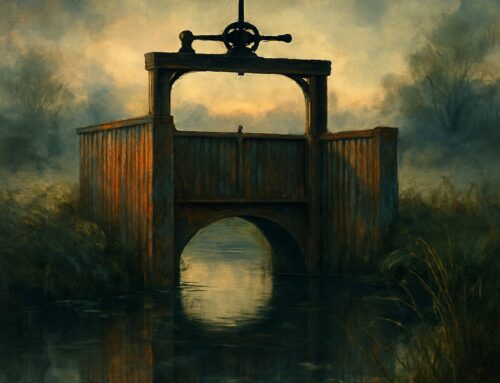
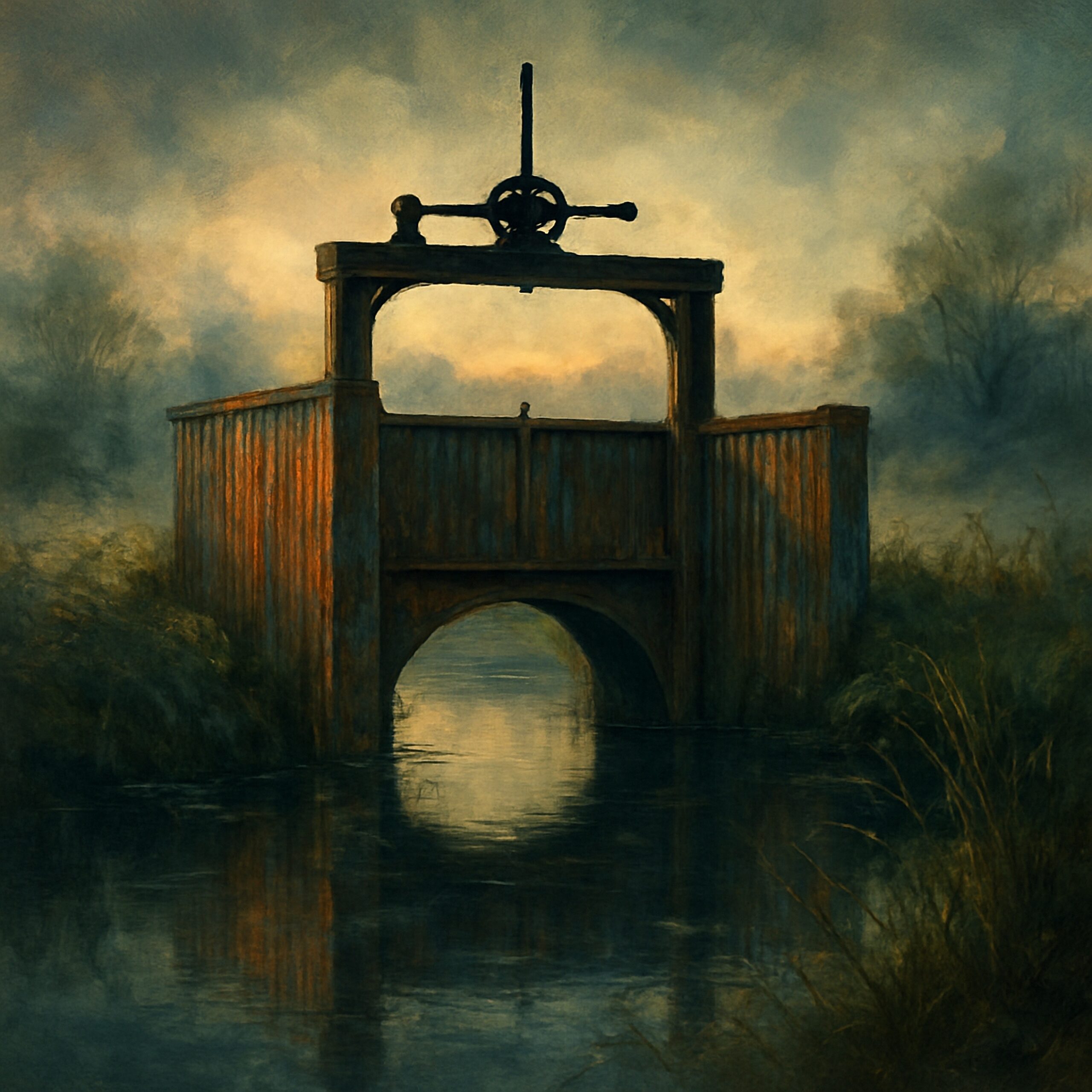
More recently, my attention has turned closer to home, particularly to the Somerset Levels. The engineering intelligence of structures such as the Bleadon Sluice offers remarkable lessons in regulating water, pressure, and flow. I have also been drawn to ancient sites like Arthur’s Stone, where megalithic architecture reflects a similarly sophisticated understanding of balance and stability.
Again and again, I see parallels with the human nervous system: how we hold pressure, how we channel energy, and how stability returns when conditions change.
Lineage and Systems Thinking
Alongside landscape work, I’ve also explored my paternal McAdam lineage. The family history traces maritime crossings and inland corridors through parts of Scotland and Ireland.
These journeys follow routes from Belfast along the Antrim Coast towards Kintyre, Islay, and Mull — landscapes shaped by sea travel, glens, and later the development of macadamised roads.
Following these routes has raised an intriguing possibility: that ways of thinking about systems — about connection, movement, and structure — may also travel through generations.
This work is not about proving historical claims. Instead, it is about relational listening — paying attention to land, to infrastructure, and to the patterns that move through families, communities, and places.
Sometimes, when those patterns are noticed, new ways of understanding resilience begin to emerge.