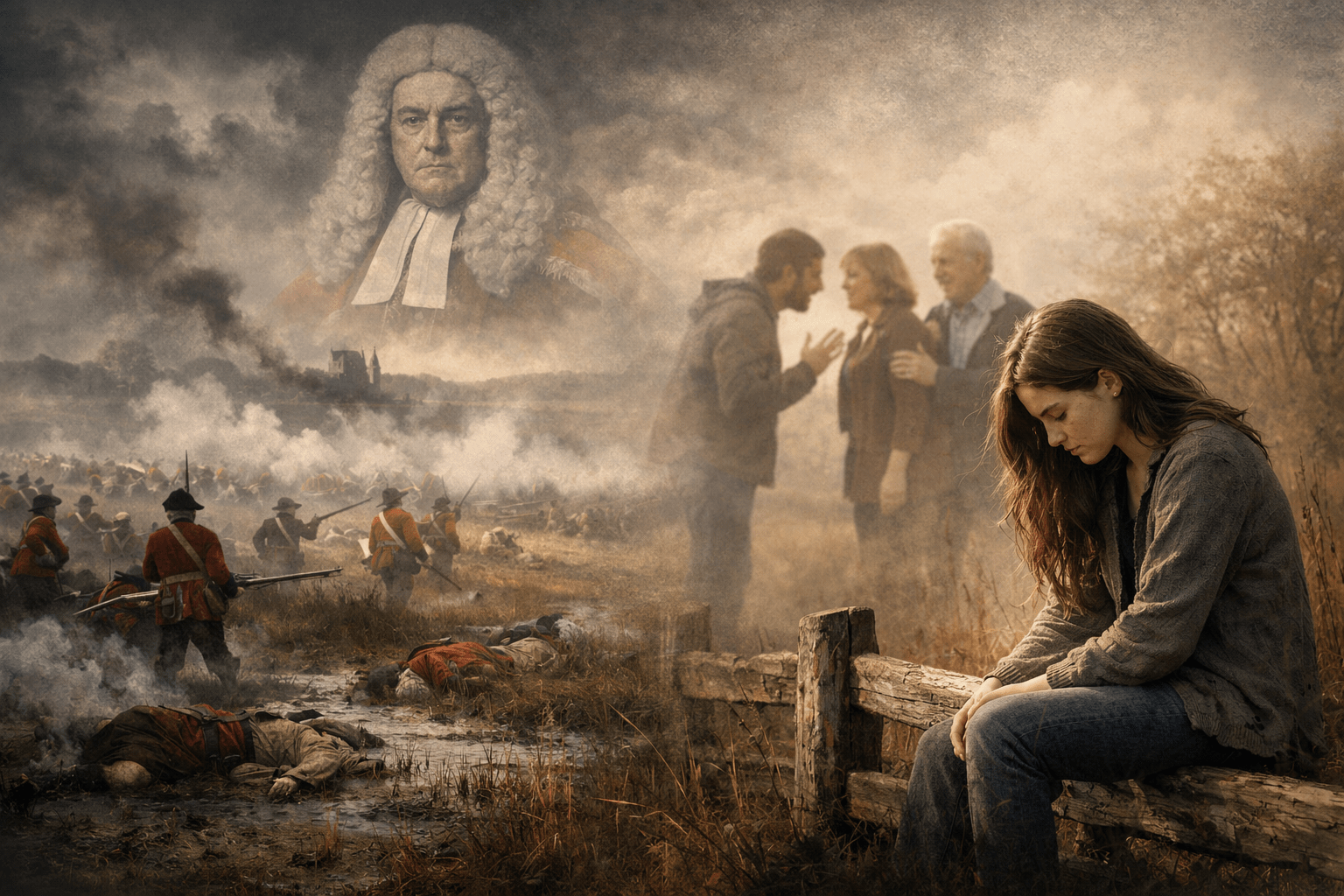
There are moments in lineage work when the past stops feeling like history and begins to feel like physiology. What we inherit is not only story, temperament, or family myth—it is also the imprint of survival strategies held in muscle, fascia, breath, and instinct. When we begin to recognise these patterns in the body, we gain the possibility of changing the trajectory of an entire line.
This is the heart of embodied choice: the moment when an inherited pattern becomes conscious enough to be met, felt, and reorganised.
Survival strategies as ancestral memory
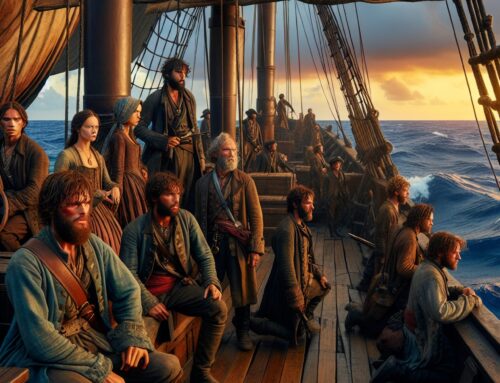
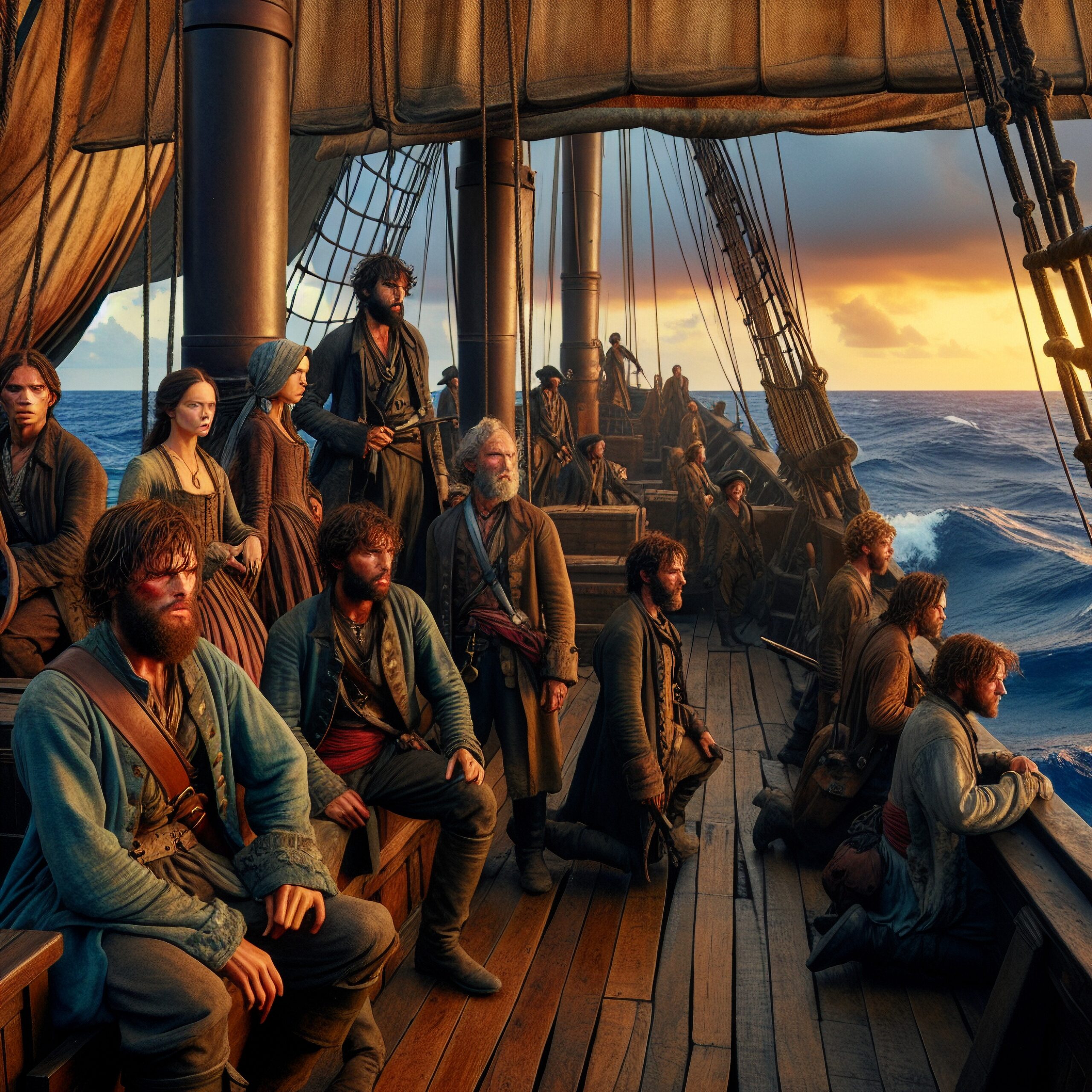
In my own work, three “cousins” appeared—not as literal men, but as symbolic figures carrying the emotional and physiological imprint of my lineage. Each one represented a distinct survival strategy shaped by trauma, loss, and the need to endure.
- The cousin with no will carried the imprint of collapse: dorsal vagal shutdown, the frozen psoas, the ancestral sense of “I can’t.”
- The cousin who was dead or in shock held the freeze response: dissociation, numbness, the suspended state that protects the system from overwhelm.
- The cousin trapped in the church, scanning embodied hypervigilance: sympathetic overactivation, the lineage that learned to survive by watching every doorway.
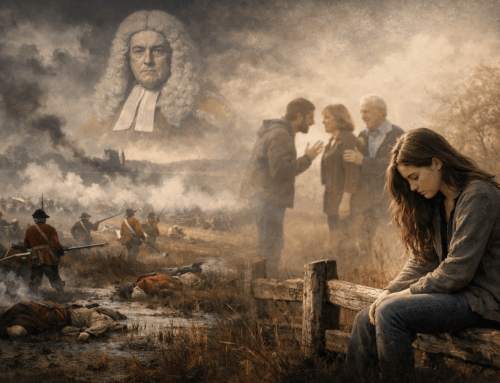
These are not pathologies. They are inherited strategies that once kept people alive—especially in a family line shaped by events like the Battle of Sedgemoor, where survival depended on silence, stillness, and vigilance.
To meet these cousins is to meet the nervous system of the lineage itself.
How landscape supports nervous system repair
The body does not heal these patterns through thought alone. It seeks environments that mirror, soften, and reorganise what has been held for generations. In this work, landscape became a co‑regulator.
Somerset wetlands and dorsal collapse
The wetlands are slow, saturated, heavy. They mirror the low‑tone, low‑drive state of dorsal vagal shutdown—the “deadness” of a lineage after defeat or grief.
Being there allowed my system to:
- feel the collapse without being overwhelmed
- sense safety in stillness rather than danger
- gently rehydrate a frozen psoas
- begin to thaw a long‑held immobilisation pattern
The land acted as a somatic container for a collapsed ancestry.
Arthur’s Stone and freeze
A chambered cairn is a nervous system metaphor: enclosed, timeless, suspended. Freeze states need containment, quiet, and a sense of mythic protection.
At Arthur’s Stone, the escarpment and valley offered orientation—the antidote to dissociation. The “cousin in shock” could feel held enough for numbness to soften and for the body to register that time was moving again.
Bleadon sluice gate and hypervigilance
A sluice gate is a controlled threshold. Hypervigilance is a system that never stops scanning the threshold.
The rusty, overgrown mechanism mirrored:
- chronic sympathetic tension
- a gate that once needed to stay shut
- a lineage that learned to regulate emotion by restricting flow
Walking there, my thighs, gut, and jaw activated—the muscles of bracing. Imagining the gate opening was not fantasy; it was my nervous system rehearsing a new pattern of regulated release.
Crystalline energy and the body’s lattice
At one point, someone described me as having “crystalline energy” in my DNA. It sounded mystical, but it also had a grounded physiological layer.
- Fascia behaves like a crystalline matrix: it is piezoelectric, responds to pressure with electrical charge, and stores and transmits information through the body.
- The nervous system creates coherent fields when regulated: signals become rhythmic, tissues resonate, and the body behaves like a structured energetic lattice.
- DNA carries epigenetic memory: ancestral stress responses, survival strategies, and patterns of vigilance, collapse, or shock.
“Crystalline energy” became a way of naming my capacity to:
- hold coherence
- stabilise others
- sense land‑based fields
- reorganise patterns in myself and my lineage
It is where biology meets myth—an embodied grid rather than an abstract idea.
Vortices, spinning tops, and reorganisation
Images of an inverted vortex and a spinning top arose as this work unfolded. They, too, had a nervous system translation.
- The inverted vortex described a reversal: dorsal collapse moving into sympathetic activation, sympathetic activation moving into ventral regulation. Old patterns unwinding, energy changing direction.
- The spinning top described a system that had accumulated charge, reached a threshold, and begun to reorganise around a new centre.
This is what trauma resolution looks like in the body: a release of stored charge followed by a new pattern of coherence.
The sluice gate as an ancestral brake
The sluice gate also held an ancestral story.
After Sedgemoor, my lineage learned:
- don’t cry
- don’t show allegiance
- don’t reveal emotion
- don’t let the charge out
Over generations, this became:
- chronic bracing
- reduced emotional expression
- tight jaw, throat, diaphragm, pelvic floor
- fear of “too much feeling”
This was not dysfunction. It was intergenerational neuroprotection—a sympathetic brake designed to keep the family safe in a world where visibility once meant danger.
Imagining the gate opening was an act of embodied choice: allowing more emotional flow while staying connected to regulation.
Why visiting the places mattered
None of this was abstract. My body needed:
- landscapes that matched each survival state
- physical metaphors to complete the pattern
- sensory environments to reorganise implicit memory
I wasn’t “just” doing ritual. I was engaging in somatic renegotiation through place. The land acted as co‑regulator, mirror, stabiliser, and witness.
This is why it felt real. Because it was.
Changing the trajectory
Changing the trajectory through embodied choice is not about forcing a new story. It is about:
- recognising inherited survival strategies in the body
- allowing them to be honoured rather than shamed
- giving them the conditions they need to complete
- choosing, again and again, not to live only from collapse, shock, or hypervigilance
Each time we do this, we shift the emotional direction of the lineage. The sluice gate opens a little. The spinning top finds a new centre. The cousins are no longer trapped in their old roles.
And a different future becomes possible—not just for us, but for those who come after.