Sovereignty: The Lost Art of Belonging to Yourself
Psychological sovereignty is the capacity to remain connected to one’s own inner authority — to live from an integrated centre rather than fear, fragmentation, or external control.
The deepest form of influence is not persuasion, but coherence — a state where people feel what you are before you say anything.
What if healing is not just something we do, but somewhere we go? Exploring destinations through the lens of the nervous system, this piece considers how different landscapes and cultures can offer antidotes to patterns of scarcity, silence, isolation, grief, and disconnection—helping the body learn that another way of being is possible.
What if Thumbelina is not a fairy tale, but a map? A story of surviving dislocation, tending to what is wounded, and learning to step beyond the safety of smallness. In the end, the prince may not be the destination at all—but the measure of who we have become.
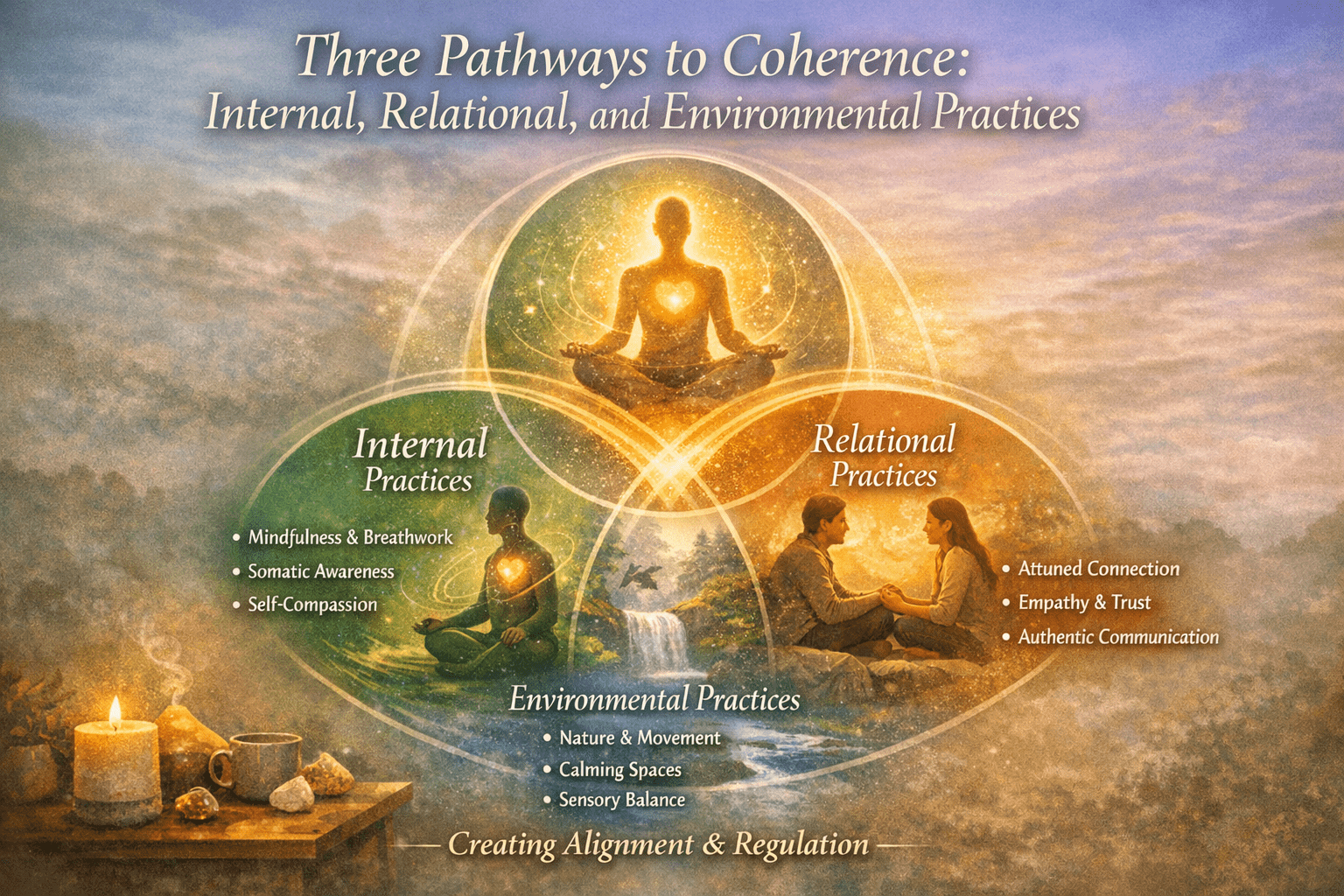
Coherence is not a fixed state but a capacity we can return to. This piece explores three pathways—internal, relational, and environmental—that support nervous system regulation and a deeper sense of alignment.
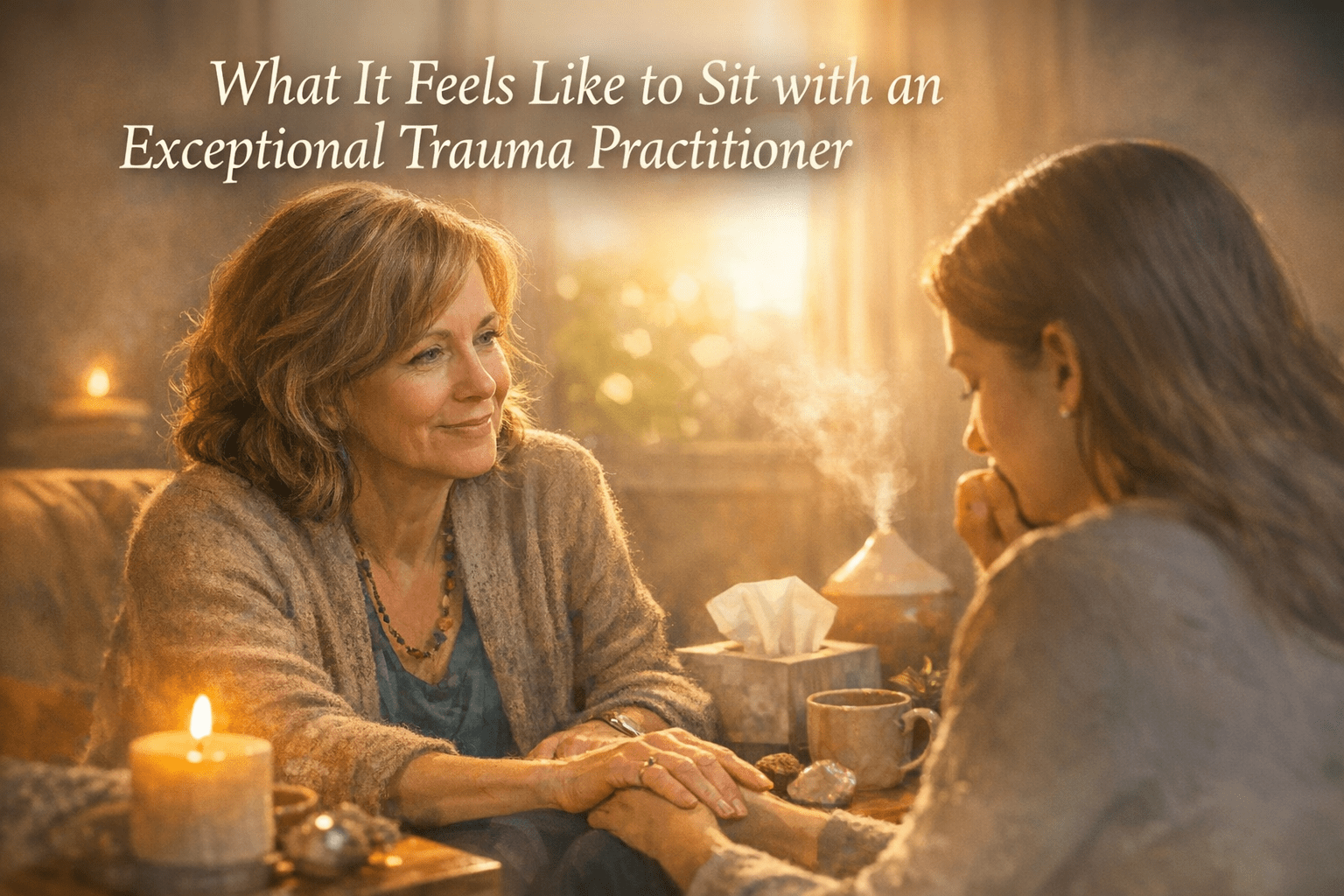
What skilled attunement feels like from the inside.
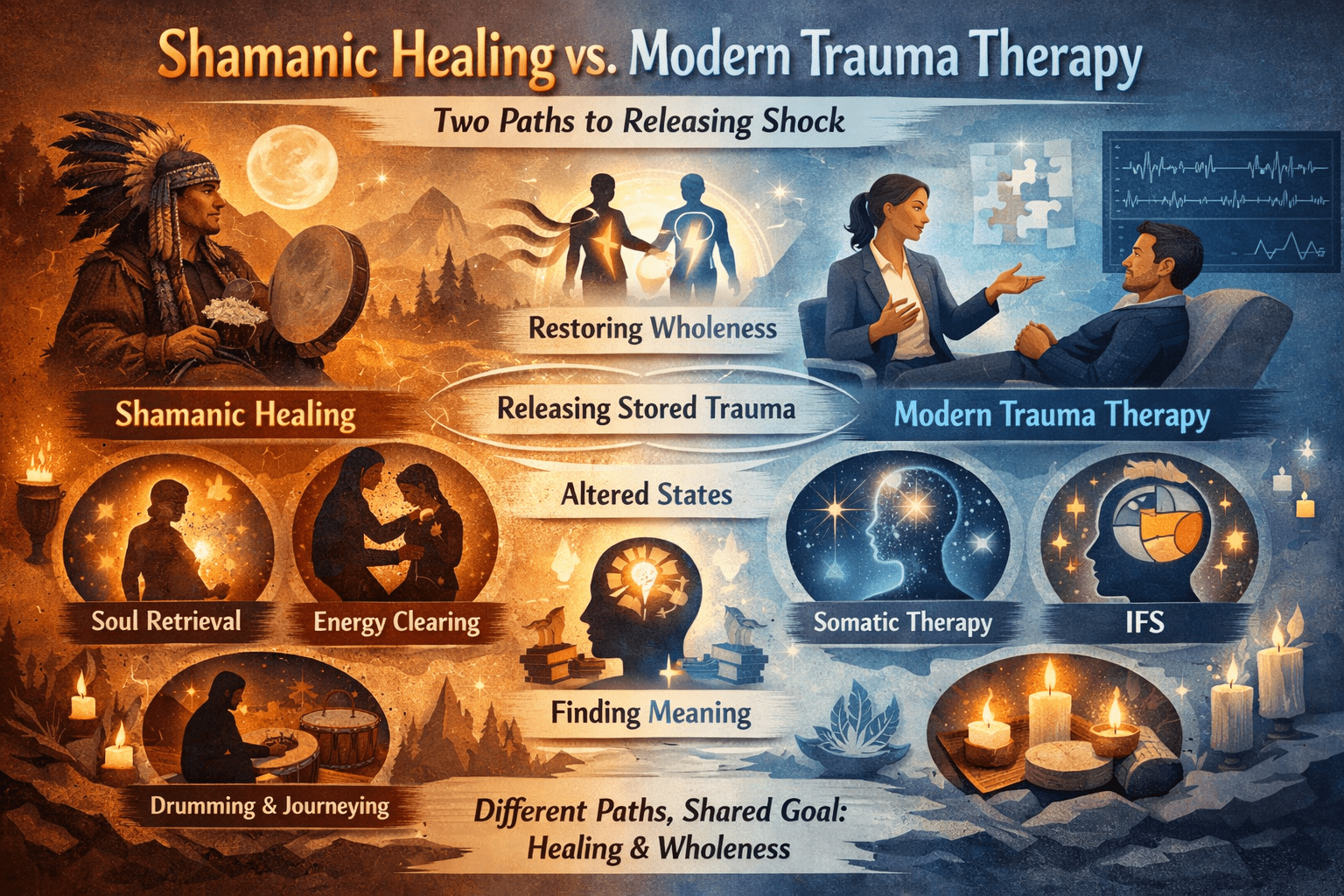
Explore how shamanic healing and modern trauma therapy approach shock and disconnection. Discover their key differences, surprising similarities, and how both aim to restore balance, wholeness, and a sense of self after overwhelming experiences.
What if the land remembers? A visit to the Somerset Levels led to an extraordinary discovery: a visionary encounter involving three cousins lost in the aftermath of the Battle of Sedgemoor was later confirmed by historical records.
'Working Jenny's solar plexus reflex on this particular occasion, we both experienced a sudden 'jolt' and we were startled by it. It was not a sensation I had experienced before and it felt like something was 'given up'. Shawnie Collier
Every Wednesday morning for the past nine months, you could have found me doing just that—picking up horse poo! Thirty-six visits and more than 200 hours of voluntary work later, I can honestly say it has been one of the most unexpectedly rewarding experiences of my life.